How Rust Forms Under Your Car and How 3M Anti-Corrosion Treatment Stops It
Most car owners obsess over what is visible, paint scratches, dents, tyre condition, interior cleanliness. Very few think about what is happening underneath. But the underside of your car is where the most expensive, most dangerous and most preventable damage quietly builds up year after year.
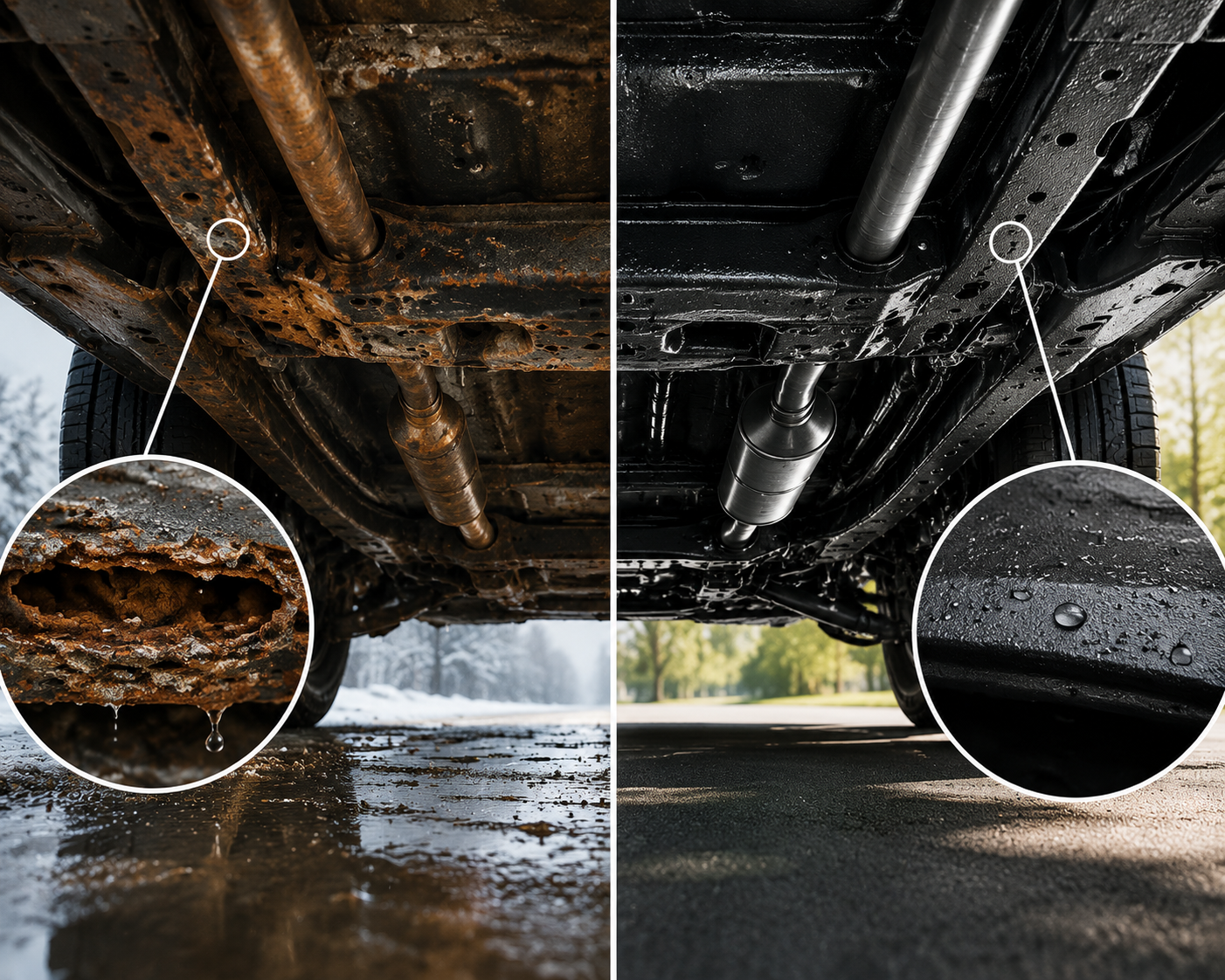
Rust is not dramatic. It does not announce itself. It starts invisibly in microscopic pores on bare metal surfaces, spreads slowly through joints and seams, and by the time it becomes visible, it has already compromised structural components that cost tens of thousands of rupees to repair or replace.
3M anti-corrosion treatment for cars is one of the most trusted and widely used solutions to this problem, used by car owners, detailing professionals and automobile manufacturers worldwide. This guide explains exactly how rust forms, why it is so destructive, and how 3M's technology stops it at the source.
Understanding How Rust Forms Under Your Car
Rust, scientifically known as iron oxide, forms through a chemical process called oxidation. When iron or steel is exposed to oxygen and moisture simultaneously, a reaction occurs that produces iron oxide on the surface of the metal. This is rust.
Here is how it progresses on a car's underbody:
-
Stage 1 — Surface Oxidation Tiny scratches, chips or worn patches in the factory underbody coating expose bare metal to air and moisture. At this stage, rust is microscopic and invisible to the naked eye.
-
Stage 2 — Surface Rust Orange and brown discolouration appears on the metal surface. The metal is still structurally intact but the protective layer is compromised. This is the last stage at which treatment is straightforward.
-
Stage 3 — Scale Rust The oxidation penetrates deeper into the metal, causing it to bubble, flake and scale. Surface area exposed to further oxidation increases exponentially. Rust spreads faster at this stage.
-
Stage 4 — Penetrating Rust The metal develops holes and structural weakness. At this point, chassis components, floor panels or suspension parts may need full replacement, not just treatment.
The transition from Stage 1 to Stage 4 can happen within 2 to 4 monsoon seasons in Indian conditions — faster in coastal or high-humidity cities. This is precisely why 3M anti-corrosion treatment for cars must be applied before rust reaches Stage 2.
Why Factory Underbody Protection Is Never Enough
Every car that rolls off the production line has some level of underbody protection, typically a thin layer of paint primer, wax or rubberised coating applied at the factory.
The problem is that factory coatings are:
-
Designed for average global conditions, not India's monsoon intensity, pothole-heavy roads or high-humidity climate
-
Applied in thin layers — adequate for transport and short-term protection, not for years of Indian road use
-
Not impact-resistant — a single pothole or gravel strike can chip away factory coating, exposing bare metal
-
Not penetrating — factory coatings sit on the surface and do not infiltrate joints, seams and crevices where moisture collects most aggressively
Within 2 to 3 years of ownership in cities like Bangalore, Mumbai or Chennai, factory underbody protection is significantly degraded, leaving your car vulnerable with every monsoon that follows. This is where 3M anti-corrosion treatment for cars steps in as a genuine long-term solution.
What is 3M Anti-Corrosion Treatment for Cars?
3M anti-corrosion treatment for cars is a professional-grade underbody protection system developed by 3M, one of the world's most trusted material science companies. The treatment uses 3M's proprietary Rubberized Undercoating and Anti-Rust Compounds, which are:
-
Thick and rubberised — providing impact resistance against road debris, gravel and stones
-
Moisture-sealing — creating a waterproof barrier over all exposed metal surfaces
-
Penetrating — the compound flows into joints, seams, bolt holes and crevices to seal moisture entry points that surface coatings miss.
-
Flexible — the rubberised formulation expands and contracts with the metal through temperature changes without cracking
-
Noise-dampening — an added benefit: the thick rubber coating significantly reduces road noise and vibration inside the cabin
3M's anti-corrosion range includes products like the 3M Rubberized Undercoating (PN 08883), 3M Professional Grade Rubberized Undercoating and cavity wax formulations, each designed for specific areas of the underbody and different levels of exposure.
How 3M Anti-Corrosion Treatment Works: Step by Step
A professional application of 3M anti-corrosion treatment for cars follows a precise process:
-
Step 1 — Vehicle Lifting and Underbody Inspection The car is raised on a hydraulic ramp. A thorough visual and physical inspection identifies existing rust spots, coating damage, areas of exposed metal and any structural concerns.
-
Step 2 — High-Pressure Underbody Wash The entire underside is pressure-washed to remove mud, grease, road tar, oil deposits and loose material. No coating should ever be applied over contaminated surfaces.
-
Step 3 — Rust Neutralisation (if required) Any existing surface rust is treated with a rust converter or neutralising agent. This chemically transforms active rust into a stable compound before sealing, a step many low-quality service centres skip, which leads to rust continuing beneath the new coating.
-
Step 4 — Masking of Sensitive Components Exhaust outlets, oxygen sensors, drain plugs, brake components and other parts that should not receive coating are carefully masked off.
-
Step 5 — 3M Compound Application The 3M rubberised undercoating is applied using professional spray equipment in even, overlapping passes. Wheel arches, chassis rails, floor panels, suspension mounting points and axle housings all receive full coverage. Cavity wax is injected into hollow sections where spray cannot reach.
-
Step 6 — Curing Period The 3M coating cures to a firm, rubberised finish within 1 to 2 hours at room temperature. Full cure and water resistance is typically achieved within 24 hours.
-
Step 7 — Final Inspection The underbody is inspected under ramp lighting to confirm complete and uniform coverage — no bare patches, thin spots or missed seams.
Key Benefits of 3M Anti-Corrosion Treatment for Cars
Choosing 3M anti-corrosion treatment for cars over generic underbody products delivers measurable advantages:
-
Trusted global brand: 3M's compounds are used by OEM manufacturers and professional detailers worldwide
-
Superior adhesion: 3M formulations bond more aggressively to metal surfaces than generic rubberised products
-
Impact and chip resistance: The thick rubberised layer absorbs gravel and road debris impact without cracking
-
Penetrating moisture seal: Flows into joints and crevices that spray coatings miss
-
Long service life: Professional 3M applications last 3 to 7 years with proper care
-
Noise reduction: Measurable reduction in road noise and vibration entering the cabin
-
Resale value protection: A clean, rust-free underbody significantly increases resale value
-
Brand warranty backing: 3M-certified applications come with product performance backing
Which Cars Need It Most?
While every car benefits from underbody protection, 3M anti-corrosion treatment for cars is particularly critical for:
| Car Type |
Reason |
| Cars over 2 years old |
Factory coating degradation accelerates after Year 2 |
| Cars driven in Bangalore, Mumbai, Chennai |
High rainfall, humidity and waterlogged roads |
| SUVs and off-road vehicles |
Higher underbody exposure to mud, water and impact |
| Cars parked outdoors regularly |
Continuous humidity and dew exposure overnight |
| Coastal city vehicles |
Salt air is significantly more corrosive than inland conditions |
| High-mileage vehicles |
More road exposure means faster coating wear |
| Pre-owned or second-hand cars |
Unknown underbody history — inspection and treatment essential |
How Often Should You Reapply It?
| Vehicle Usage |
Recommended Reapplication Cycle |
| Light city use, covered parking |
Every 4 to 5 years |
| Daily city driving, Bangalore / Mumbai |
Every 2 to 3 years |
| Heavy monsoon exposure, outdoor parking |
Every 2 years |
| Off-road or rough terrain driving |
Every 1 to 2 years |
| Pre-owned car with unknown history |
Inspect and treat immediately, then follow standard cycle |
Annual underbody inspections are recommended regardless of reapplication schedule — especially after each monsoon season.