Why Does Car Sun Control Film Turn Purple or Develop Hazy Patches?
Have you noticed that your car windows are developing a purple shade or cloudy appearance? What once looked like a clear, professional finish may gradually become discoloured or hazy. These changes can affect visibility, driving comfort, and the appearance of your vehicle.
Understanding why Car Sun Control Film changes colour helps car owners identify potential film deterioration, installation concerns, and maintenance issues. In a city like Bangalore, where vehicles experience regular sunlight, dust, and varying temperatures, recognising early warning signs can help prevent further problems.
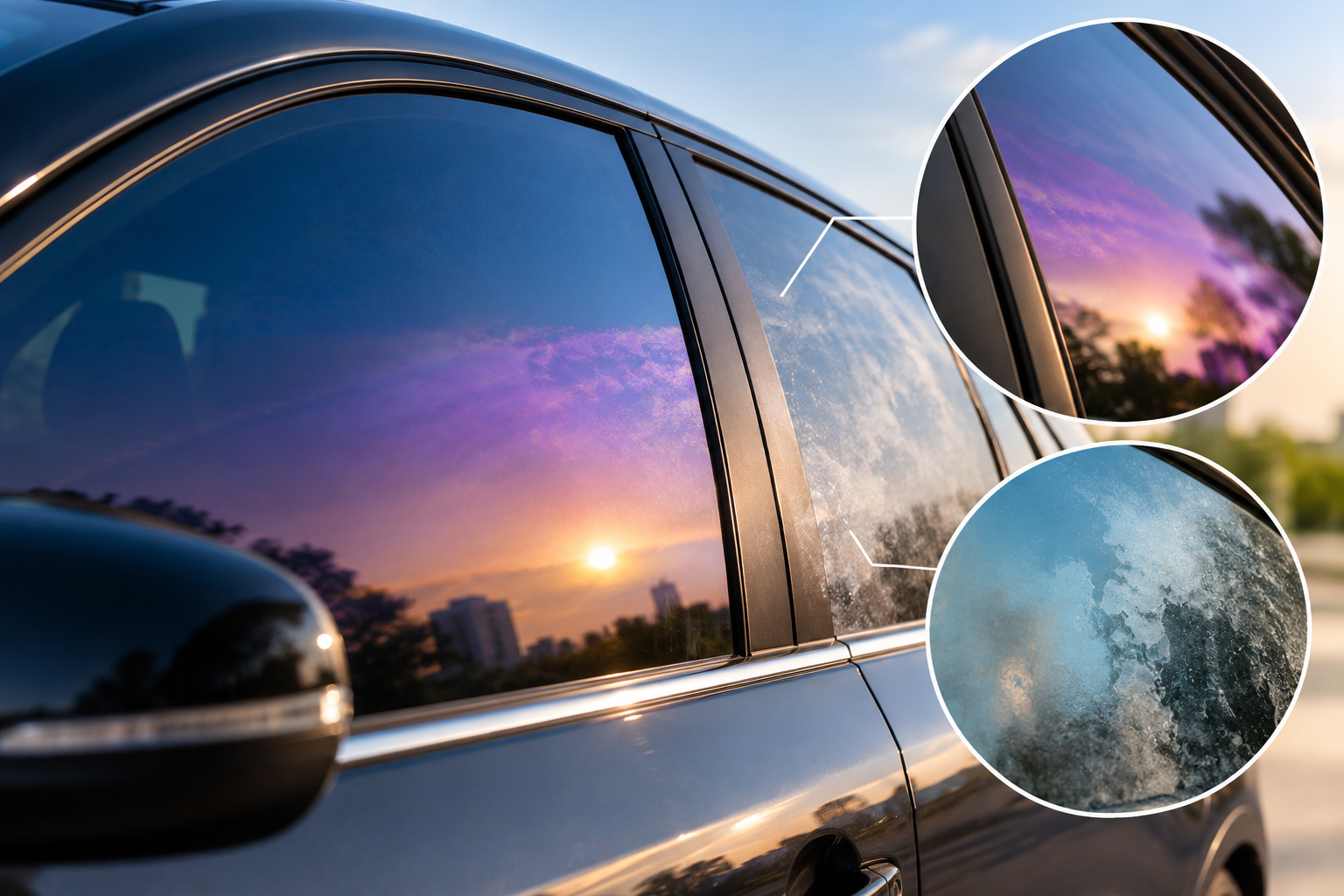
Why Does Car Window Film Turn Purple?
Purple discolouration is commonly associated with the ageing of certain dyed window films.
Some traditional window tints use coloured dyes to create their dark appearance. Over time, ultraviolet exposure can cause these dyes to degrade unevenly.
As particular pigments fade, the film may develop a purple or reddish appearance.
Low-quality Car Sun Control Film may be more vulnerable to this type of colour change, especially when exposed to prolonged sunlight.
However, not every film uses the same technology. Colour-stable and appropriately engineered films are designed to resist common forms of discolouration.
The actual performance depends on the product, installation quality, exposure conditions, and maintenance history.
What Causes Hazy or Cloudy Patches on Car Windows?
Hazy patches can develop for several reasons, and not every cloudy appearance indicates permanent damage.
Recently installed Car Sun Control Film may show temporary moisture haze during the curing process.
This happens because installation solutions can leave moisture between the film and glass until drying is complete.
However, persistent cloudiness may indicate trapped contamination, adhesive deterioration, ageing, or installation defects.
Temporary Haze vs Permanent Film Damage
Temporary haze usually improves as the film cures according to manufacturer instructions.
Persistent milky patches, spreading bubbles, peeling edges, or cloudy adhesive may require inspection.
Avoid attempting to puncture bubbles or remove the film yourself.
A professional inspection can help determine whether the issue is normal curing or a more serious defect.
Does Bangalore's Climate Affect Window Film Performance?
Bangalore's changing weather conditions can influence the environment in which vehicle films operate.
Cars parked outdoors may experience prolonged sunlight, dust, humidity, and repeated temperature changes.
Drivers considering Car Sun Control Film should therefore pay attention to the film's durability, specifications, and installation requirements.
Vehicle owners around Nagasandra who regularly park outdoors may particularly appreciate advice about film care and periodic inspection.
However, heat exposure alone does not automatically mean a high-quality film will fail.
The material formulation, adhesive system, glass condition, and installation process are equally important.
Choosing a suitable film and maintaining it correctly can help preserve appearance.
Can Poor Installation Cause Window Film Problems?
Installation quality plays an important role in the finished appearance of automotive window films.
Even suitable Car Sun Control Film may show defects when the glass is inadequately cleaned or the film is improperly positioned.
Dust particles, trapped debris, excessive creasing, and uneven application can affect the final result.
Some small moisture patterns are expected immediately after installation, but persistent contamination or lifted edges deserve attention.
Signs That Require Inspection
Watch for spreading bubbles, particles trapped beneath the film, loose edges, and haze that remains beyond the recommended curing period.
For car owners in Nagasandra, an inspection can help distinguish a correctable installation issue from deteriorated film.
Does Film Quality Affect Colour Stability?
Different window films use different materials and technologies.
Some dyed films can gradually fade, while colour-stable films are engineered to maintain their appearance under normal operating conditions.
Premium Car Sun Control Film products may incorporate specialised material technologies designed to improve durability and optical clarity.
However, buyers should examine verified product specifications instead of relying only on claims such as premium, advanced, or long-lasting.
Ask about the film series, warranty coverage, heat-rejection specifications, and maintenance instructions.
A suitable product should offer clear visibility and meet the applicable vehicle-glazing requirements.
Film selection should consider both performance and legal compliance.
Can Cleaning Chemicals Damage Window Film?
Incorrect cleaning practices can contribute to scratches or deterioration.
When maintaining Car Sun Control Film, follow the cleaning instructions provided for the specific film series.
Avoid abrasive brushes, sharp tools, rough wiping materials, and unnecessary scraping.
Some manufacturers permit certain cleaning solutions after curing, while others specify more restrictive care instructions.
For this reason, general advice about household cleaning chemicals should not replace product-specific recommendations.
Use a clean, soft cloth and a compatible cleaner.
Vehicle owners visiting the Nagasandra area for car care services can ask professionals about suitable products and cleaning intervals.
Should Purple or Hazy Film Be Replaced?
Not every visible issue requires immediate film replacement.
Minor moisture haze after recent installation may disappear during the recommended curing period.
However, Car Sun Control Film showing significant discolouration, persistent cloudiness, adhesive failure, or peeling may need professional removal.
If the film interferes with safe visibility, especially at night or during rain, the issue should be addressed promptly.
An installer can inspect the condition of the glass and film before suggesting a solution.
Replacement suitability depends on the product, vehicle glazing, manufacturer instructions, and current legal requirements.
The safest decision is based on an actual inspection rather than appearance alone.
How Can You Prevent Future Window Film Problems?
Preventive care begins before installation.
Choose Car Sun Control Film with clearly documented performance characteristics and suitable manufacturer support.
Discuss product options, expected maintenance, curing time, and warranty conditions before confirming installation.
After installation, avoid lowering windows or cleaning the film until the manufacturer-recommended period has passed.
Do not pull at film edges or apply incompatible accessories directly onto newly installed film.
Regular visual checks can help identify discolouration or peeling early.
Owners should also retain invoices and product documentation for future warranty enquiries.
Why Consider Professional Sun Film Inspection?
Film problems can have several causes that look similar from outside the vehicle.
Professional Car Sun Control Film inspection helps identify whether a visible defect is associated with curing, contamination, ageing, or adhesive deterioration.
Technicians can also assess whether safe removal is necessary.
Avoid assuming that a darker film automatically provides better protection or performance.
A suitable solution should consider visibility, product specifications, and legal requirements.
For drivers in Nagasandra, Bangalore, professional guidance can help determine the most practical next step without unnecessary replacement.
Maintain Clear Visibility with 3M Car Care Bangalore
Maintaining your vehicle's windows is about more than appearance.
Correctly selected and maintained Car Sun Control Film can contribute to driving comfort while preserving clear visibility.
If your window film shows purple discolouration, persistent haze, bubbling, or loose edges, consider having the issue professionally assessed.
3M Car Care Bangalore offers automotive care services and can be contacted to discuss available sun control film products, inspection options, and installation requirements.
Visit the website to enquire about suitable services and current availability.
Frequently Asked Questions
Why does Car Sun Control Film turn purple?
Some dyed window films experience uneven pigment degradation after prolonged ultraviolet exposure, which can create a purple appearance.
Is haze normal after new sun film installation?
Mild haze can occur while installation moisture evaporates. Follow the film manufacturer's recommended curing period before judging the final appearance.
Can purple car window tint be cleaned?
If the colour change comes from degraded film pigments, ordinary cleaning will not restore the original colour.
How long should window film curing take?
Curing time varies with film type, temperature, humidity, and manufacturer guidance. Contact the installer if haze persists beyond the stated period.
Can hazy film affect night driving?
Yes. Significant haze or optical distortion may reduce visibility, particularly when headlights create glare.
Can damaged window film be removed?
Professional removal is generally possible, but the correct technique depends on the film, adhesive, glass, and vehicle equipment.
Does expensive window film always last longer?
Not necessarily. Product specifications, material technology, installation quality, environmental exposure, and maintenance all influence performance.
Where can I enquire about window film services in Bangalore?
Contact 3M Car Care Bangalore through its official website to discuss available products, film inspection, and service options.