What Happens to the Original Car Paint When a Vinyl Wrap Is Removed?
Vinyl car wraps have become a popular choice for vehicle owners who want a fresh appearance without permanently repainting their cars. From matte black roofs to complete colour transformations, wrapping offers numerous customisation possibilities.
However, an important question arises when the wrap needs to be removed: Will the original paint remain undamaged?
Understanding Car Wrap Removal helps owners make informed decisions before applying or replacing vinyl film. The outcome depends on paint condition, film quality, installation practices, environmental exposure, and the removal method. Knowing these factors can help protect your vehicle's original finish.
Does Removing a Vinyl Wrap Damage Factory Paint?
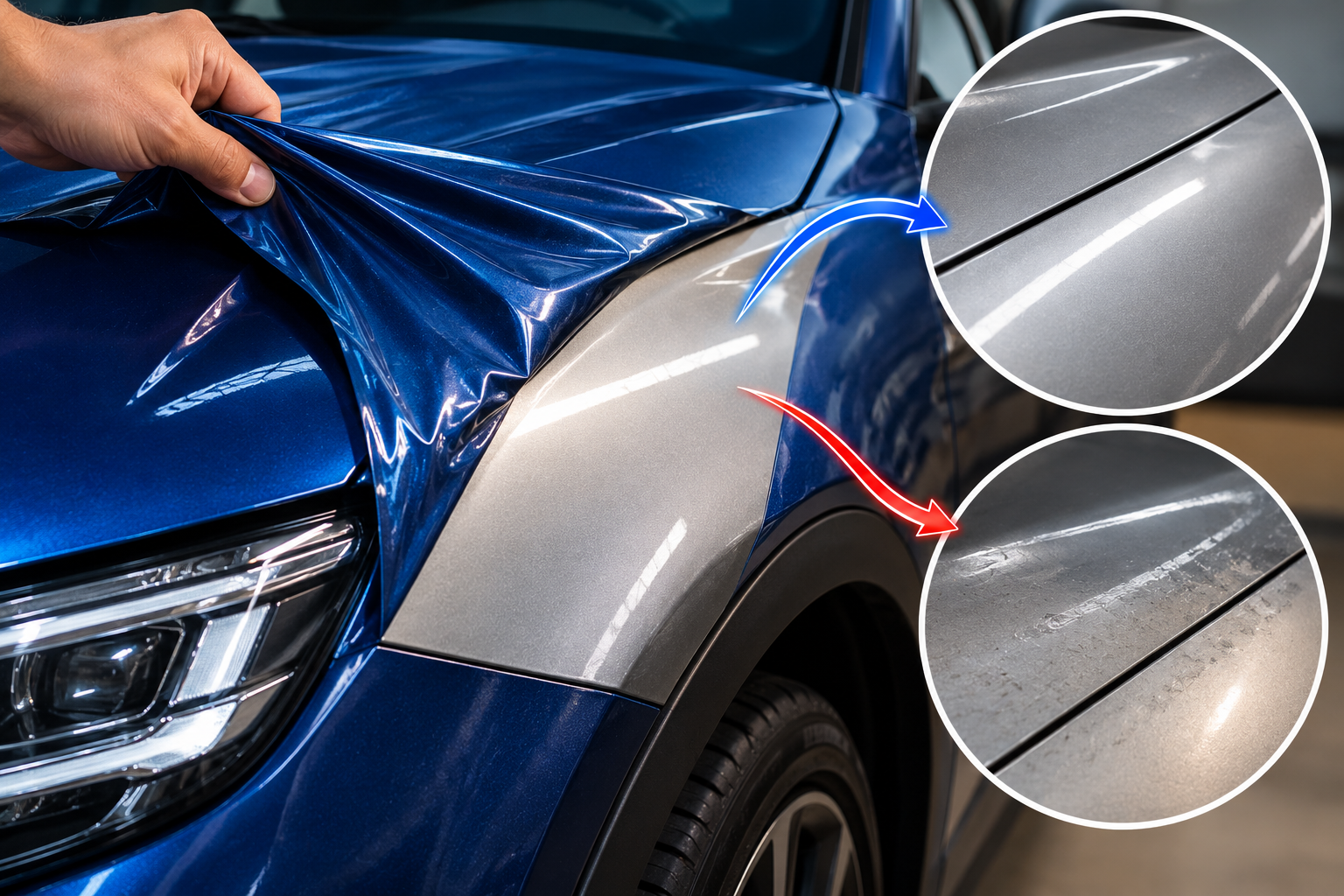
A professionally installed vinyl wrap on sound factory paint can often be removed without damaging the underlying finish.
However, Car Wrap Removal is not completely risk-free.
Modern factory-applied automotive paint generally has strong adhesion, making it more suitable for wrapping than damaged or improperly repaired surfaces.
Problems can occur when the paint was already peeling, cracked, poorly bonded, or weakened before installation.
Aged adhesive and unsuitable removal techniques may also increase the difficulty of removing a wrap.
For this reason, responsible installers inspect the painted surface before applying or removing vinyl.
No professional should guarantee identical removal results for every vehicle.
What Happens to the Adhesive During Vinyl Wrap Removal?
Automotive vinyl wraps generally use adhesive systems designed to hold the film securely against the painted surface.
During Car Wrap Removal, the adhesive should separate from the vehicle when appropriate techniques are used.
However, adhesive residue may remain, particularly on older installations or areas subjected to extensive heat exposure.
Professionals may use controlled warming and compatible adhesive-removal products according to manufacturer instructions.
Aggressive scraping, unsuitable solvents, and excessive heating can damage the finish.
Vehicle owners should avoid experimenting with strong household chemicals.
An experienced technician can assess the film type and condition before selecting the appropriate removal process.
Is Repainted Car Paint More Vulnerable?
Yes. Repainted panels may present additional risks depending on the quality and condition of the repair.
Professional Car Wrap Removal requires special attention when a vehicle has undergone dent repair, repainting, or panel replacement.
Unlike factory paint, the adhesion of a refinished surface can vary according to preparation, materials, application, and curing.
A poorly bonded or insufficiently cured paint layer may lift when the vinyl is removed.
For vehicle owners around Nagasandra, a professional paint inspection is particularly useful when purchasing a used car with an existing wrap.
Inform the installer about known repair history before removal begins.
Does Wrap Age Affect the Removal Process?
Vinyl wraps are not intended to remain on vehicles indefinitely.
As wrapping materials age, environmental exposure can influence their flexibility and adhesive characteristics.
Older films may become brittle or difficult to remove in large sections.
This means Car Wrap Removal can become more labour-intensive when the film has deteriorated.
Sunlight, heat, moisture, film quality, and vehicle storage conditions all contribute to ageing.
A wrap approaching the end of its recommended service period should be inspected rather than ignored.
Waiting until the film cracks or breaks apart may increase removal complexity.
Always follow the applicable product guidance and warranty conditions.
Can Professional Removal Help Preserve Original Paint?
Professional technicians assess film condition, paint stability, and the most suitable removal procedure.
During Car Wrap Removal, they may use controlled heat to make the vinyl easier to separate from the surface.
They also monitor painted edges, trims, and previously repaired areas.
The exact removal angle and equipment depend on the product manufacturer's recommendations.
Improper techniques may create scratches, damage plastic components, or lift vulnerable paint.
For motorists in Nagasandra, consulting a qualified car wrapping professional can be a sensible step before attempting removal.
A careful process cannot eliminate every risk, but it can reduce avoidable damage.
Will the Paint Look Different After the Wrap Is Removed?
Sometimes, the uncovered surface may look different from surrounding painted areas.
A vinyl wrap can reduce direct exposure of covered paint to sunlight and environmental contamination.
After Car Wrap Removal, previously protected panels may therefore appear glossier or less weathered than exposed areas.
However, this depends on the age of the vehicle, condition of the paint, wrap quality, and environmental exposure.
A wrap does not repair scratches, corrosion, or pre-existing paint defects.
If a panel was damaged before wrapping, the issue may still be visible after the film is removed.
Professional cleaning or paint correction may improve certain cosmetic imperfections.
Can Vinyl Wrap Removal Leave Scratches or Marks?
Removing vinyl film does not normally require scraping the painted surface with sharp tools.
However, inappropriate equipment or techniques can cause damage.
Poorly performed Car Wrap Removal may leave scratches, adhesive marks, or lifted paint around vulnerable sections.
Problems can also arise if a damaged wrap is pulled away aggressively without assessing adhesion.
Professional technicians generally work methodically around corners, edges, panel joins, and decorative trims.
For customers near Nagasandra, documenting the vehicle's appearance before removal can help identify any pre-existing defects.
Photographs of repaired panels, scratches, and paint chips may also be useful.
What Should You Check Before Removing a Car Wrap?
Before arranging Car Wrap Removal, identify the film's age, product type, installation history, and any previous paint repairs.
Ask the service provider to inspect the vinyl for cracking, brittleness, bubbling, and edge damage.
Confirm whether the quotation includes adhesive cleaning, post-removal washing, and paint inspection.
You should also ask how the installer handles areas where paint adhesion appears weak.
If the vehicle has a recent repaint, consult the paint repairer regarding curing and suitability for film removal.
An inspection-based approach is preferable to assuming the same method works for every vehicle.
Should You Apply a New Wrap After Removing the Old One?
A vehicle can often be wrapped again if its paint and body panels are suitable.
However, Car Wrap Removal should be followed by an assessment of the exposed finish.
Any adhesive residue should be cleaned using compatible products.
The installer should check for paint damage, corrosion, uneven surfaces, and repaired sections.
New vinyl should not be used to hide unstable paint or unresolved surface defects.
If necessary, address paintwork concerns before proceeding.
Car owners around Nagasandra can enquire about suitable styling options after the vehicle's condition has been assessed.
The best approach depends on long-term appearance goals and the condition of the original surface.
Protect Your Vehicle's Finish with Professional Car Care
A car wrap offers attractive styling possibilities, but its removal deserves the same attention as installation.
Correctly managed Car Wrap Removal can help preserve sound original paint and minimise unnecessary damage.
3M Car Care Bangalore offers automotive customisation and car care services for customers seeking professional advice about vehicle styling and paint protection.
Before removing or replacing a wrap, enquire about product suitability, surface inspection, and available service options.
Contact 3M Car Care Bangalore to discuss your vehicle's wrapping requirements and plan the next step.
Frequently Asked Questions
Can Car Wrap Removal damage original factory paint?
Damage is generally unlikely on sound factory paint when suitable film and professional removal methods are used, but existing defects can increase risk.
Can vinyl wrap damage repainted panels?
Yes. Poorly bonded or incompletely cured repainting may lift during removal.
Does removing a car wrap leave sticky residue?
Some residue may remain, especially with older films. Professionals can use compatible cleaning methods to remove it.
Can I remove a vinyl wrap myself?
It may be possible, but professional removal is recommended to reduce risks to paint, trims, and other vehicle components.
Will the original paint look new after removing a wrap?
Not necessarily. The result depends on the previous paint condition, age, exposure, and wrapping history.
How long does vinyl wrap removal take?
The duration depends on vehicle size, coverage, film condition, adhesive behaviour, and the complexity of removal.
Can another vinyl wrap be installed immediately?
Rewrapping may be possible after inspection and preparation, provided the exposed paint is stable and suitable.
How much does professional wrap removal cost in Bangalore?
Pricing depends on vehicle dimensions, film condition, covered panels, and labour requirements. Request an inspection-based quotation.